E-commerce localisation services for every Belgian language region
International retailers often witness a familiar pattern: traffic from Belgian cities like Brussels, Antwerp and Liège increases steadily, yet conversion rates remain disappointingly low.
The reason is rarely the product itself.
Belgian consumers encounter prices in foreign currencies, sizing charts they cannot interpret, and product descriptions that feel machine-translated rather than written for them.
In a trilingual market where Dutch, French and German coexist alongside English for international business, a generic approach simply fails to deliver results.
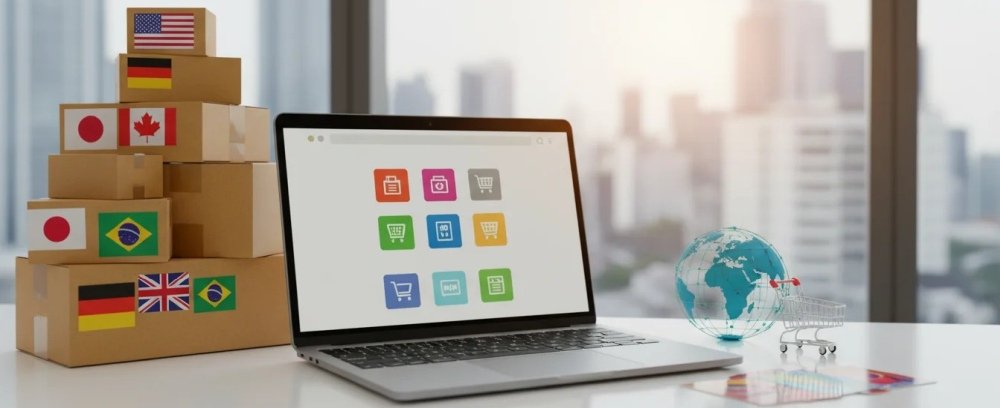
Professional e-commerce localisation addresses every element that influences purchasing decisions: from persuasive product copy and local payment integration to technical SEO and cultural adaptation.
The following sections examine how to adapt online stores for each Belgian language community, integrate essential local payment methods like Bancontact, optimise product descriptions for regional search behaviour, and implement technical foundations that support multilingual success.
Ready to increase international sales? Contact the team on +32 485 85 30 89 or email hello@betranslated.be for a free consultation.
Why Belgian shoppers abandon foreign online stores
Cross-border e-commerce continues to grow at approximately twice the rate of domestic online retail, presenting significant opportunities for ambitious brands.
Yet capturing Belgian market share requires more than simply making a website accessible from Belgian IP addresses.
Shoppers in Ghent or Charleroi evaluate foreign stores against local competitors who understand their preferences instinctively.
When a potential customer lands on a page displaying prices in pounds sterling, UK dress sizes, and shipping estimates referencing unfamiliar carriers, trust evaporates immediately.
Belgium presents a particularly complex environment.
The country hosts the headquarters of numerous EU institutions, attracting a sophisticated, multilingual consumer base with high expectations.
Flemish consumers in Antwerp and Bruges expect Dutch-language interfaces, while Walloon shoppers in Liège and Namur require French.
The German-speaking community in the eastern cantons, though smaller, represents another distinct audience.
Treating Belgium as a single market ignores these linguistic realities and guarantees underperformance.
The true cost of poor localisation
Inadequate multilingual e-commerce website adaptation creates measurable losses beyond abandoned shopping carts.
Higher return rates emerge when customers misinterpret sizing information.
Customer service costs increase as confused shoppers submit queries that properly localised content would have answered.
Brand perception suffers when product pages read like automated translations, positioning the business as an outsider unwilling to invest in local customers.
Belgian consumers, particularly in Brussels where international comparison shopping is commonplace, quickly identify stores that have not committed to proper market entry.
The complete e-commerce localisation checklist for Belgium
Successful Shopify localisation or Magento adaptation requires attention to multiple interconnected elements.
Each component influences the others, meaning partial implementation often produces minimal improvement.
A comprehensive approach addresses language, currency, payment methods, shipping, legal compliance, and customer support simultaneously.
Product titles and descriptions
Effective product copy goes far beyond literal translation.
A jumper in the UK becomes a pull in French-speaking Liège and a trui in Dutch-speaking Antwerp.
Search intent differs across regions, and product descriptions must reflect how Belgian consumers actually search for items.
Professional transcreation adapts marketing messages to resonate with local audiences while preserving brand voice and persuasive impact.
For retailers in specialised sectors like automotive, technical terminology requires particular attention to ensure accuracy across all language versions.
Currency and payment gateways
While the Euro serves as Belgium’s currency, payment method preferences set the market apart dramatically.
Bancontact dominates Belgian e-commerce payments, accounting for over 80% of online transactions according to recent industry data.
Stores without Bancontact integration effectively exclude the majority of potential Belgian customers.
Integration with Payconiq provides additional convenience for mobile-first shoppers.
Payment providers such as Mollie or Adyen simplify the technical implementation of these local methods within Shopify or Magento environments.
Sizing charts and product specifications
UK size 10 corresponds to European size 38.
Customers in Bruges should never need to calculate conversions themselves.
Clear, localised sizing information reduces return rates and builds confidence in purchasing decisions.
Measurements should appear in metric units throughout, with weight displayed in kilograms and dimensions in centimetres.
Shipping and returns
Belgian consumers expect transparency regarding delivery options.
References to familiar carriers like Bpost or PostNL create immediate recognition.
Returns policies must comply with Belgian consumer protection regulations, overseen by the SPF Economie (Federal Public Service Economy).
The upcoming Consumer Protection Code 2025 will further strengthen consumer rights from March 2026, expanding statutory guarantees to micro, small and medium-sized enterprises.
Stores demonstrating awareness of these frameworks signal professionalism and commitment to the local market.
Legal documentation for e-commerce
Operating across borders requires properly translated legal content.
Terms and conditions must comply with Belgian consumer law in each language version.
Commercial contracts with local suppliers, distributors or fulfilment partners need precise linguistic adaptation.
For businesses establishing formal partnerships, employment contracts for Belgian staff and lease agreements for warehouse or retail space require sworn translation to ensure legal validity.
Retailers expanding physical operations may also need power of attorney documents translated for local representatives.
Customer service in multiple languages
For high-value purchases, providing support in French and Dutch is non-negotiable.
Many businesses begin by localising FAQ sections and preparing professional templates for email responses in each language.
Live support options can utilise multilingual helpdesk services or native-speaking specialists.
Providing customer service in the shopper’s native language significantly increases trust and repeat purchase rates.
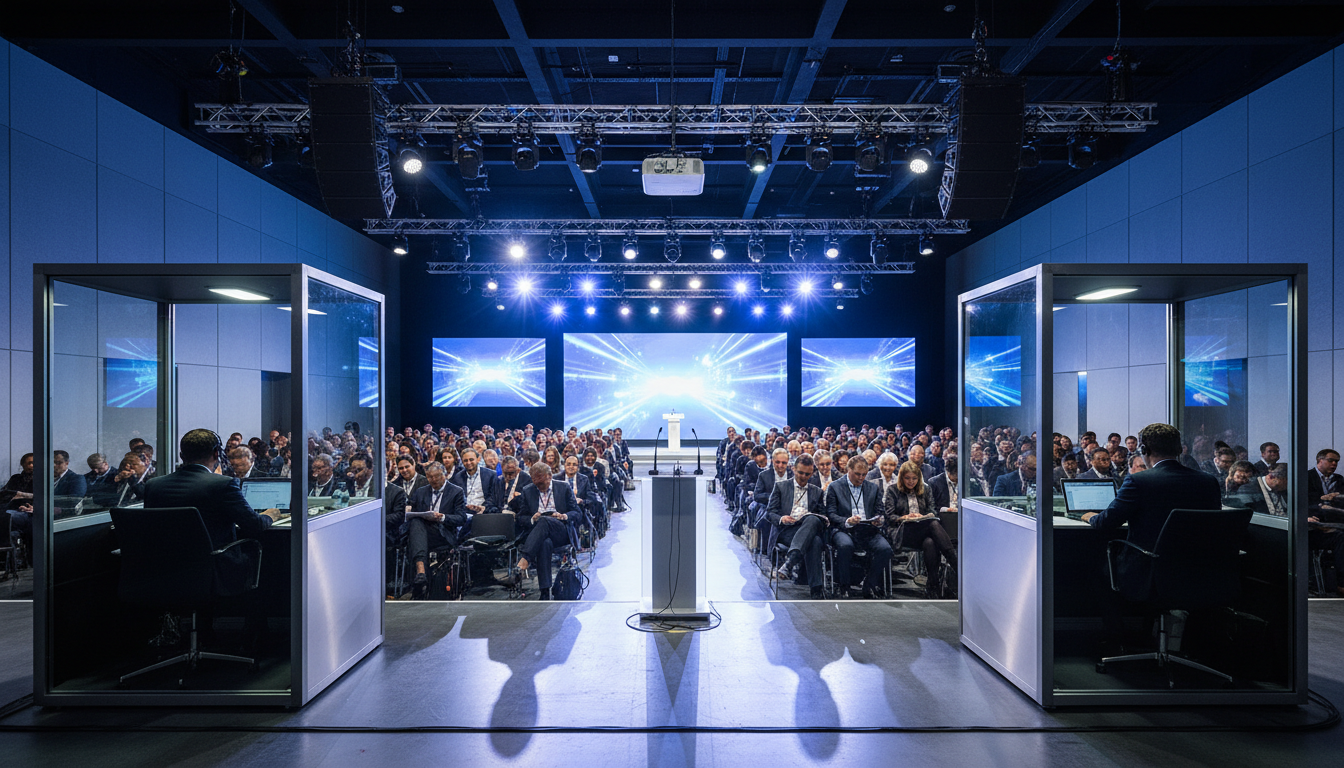
For brands hosting product launches, trade shows or dealer events in Belgium, business interpreting services ensure clear communication with local partners and customers.
Remote interpreting offers a flexible solution for virtual meetings with Belgian distributors or customer support escalations.
Technical foundations for multilingual e-commerce success
Platform configuration forms the backbone of any cross-border e-commerce strategy.
Modern tools have simplified multilingual store management, yet the quality of output depends entirely on proper implementation and professional content.
Hreflang tags and URL structure
Hreflang tags instruct search engines which language version of a page to display to users in specific locations.
When a user in Antwerp searches for products, correct hreflang implementation ensures Google serves the Dutch version rather than the French or English alternative.
Incorrect implementation leads to duplicate content penalties and frustrating user experiences where customers land on pages they cannot read.
Subdirectory structures (yourstore.com/fr-be/ or yourstore.com/nl-be/) are generally preferred for e-commerce as they consolidate domain authority while clearly separating language versions.
Translation apps versus professional services
Plugins like Langify or Weglot provide useful frameworks for managing multilingual content.
However, their reliance on machine translation produces output lacking the nuance required for high-conversion sales pages.
A hybrid approach works best: technology handles the structural framework while human linguists create the persuasive, culturally adapted content that drives purchases.
High-traffic pages, product descriptions and SEO metadata deserve professional attention to ensure brand integrity and maximum conversion potential.
Multilingual inventory management
Modern platforms allow multiple language versions of a product to link to a single inventory SKU.
When an item sells through the French version, stock levels update automatically across Dutch and English versions.
Product Information Management (PIM) systems provide additional control for businesses managing thousands of products across multiple regions.
International SEO for the Belgian market
Localising store content represents only half the challenge.
Customers must be able to find the store through search engines.
Simply translating English keywords fails to account for how Belgians actually search for products.
Professional SEO services for the Benelux region combine linguistic expertise with technical optimisation for maximum visibility.
Local keyword research
A straightforward term like running shoes requires different targeting across Belgian language communities.
Flemish audiences search for hardloopschoenen, while Walloon shoppers use chaussures de course or baskets de running.
Without region-specific keyword research, stores remain invisible to substantial portions of their potential audience.
Belgian Dutch differs from Netherlands Dutch, and Belgian French contains variations from standard French.
Professional linguists familiar with these distinctions ensure content targets the precise terms local consumers actually use.
Optimised metadata and local backlinks
Meta titles and descriptions require individual adaptation for each language version.
Direct translations often exceed character limits or fail to incorporate local search terms effectively.
Building authority within the Belgian digital ecosystem through mentions in local lifestyle publications, news outlets in cities like Bruges, Namur or Ghent, and industry-specific Belgian platforms strengthens overall search visibility.
Belgium hosts numerous international businesses and savvy local retailers, making sharp international SEO essential for competitive positioning.
Resolving cross-border commercial disputes
International e-commerce occasionally involves disagreements with suppliers, logistics partners or customers across jurisdictions.
International dispute documentation requires precise translation to protect commercial interests.
Court decisions from Belgian tribunals need accurate rendering for enforcement in other countries.
Businesses with complex supply chains may require translated internal regulations to ensure compliance across all operating territories.
Working with a local partner
Headquartered in Belgium, the team at BeTranslated possesses intimate understanding of local business culture, legal requirements and linguistic nuances that foreign providers cannot replicate.
The difference between business etiquette in Antwerp versus the international atmosphere of Brussels influences everything from product positioning to marketing tone.
Experienced project managers serve as strategic consultants, ensuring every element—from checkout buttons to privacy policies—aligns with Belgian consumer expectations.
Documented increases in conversion rates of up to 40% demonstrate the commercial impact of thorough localisation.
For major product launches or conference events in Belgium, interpretation services complement written localisation to deliver consistent brand messaging across all touchpoints.
Start converting Belgian shoppers today
The Belgian market offers substantial opportunity for international brands willing to invest in proper localisation.
Every day of sub-par conversions represents revenue transferred to competitors who understand local expectations.
Request a free e-commerce localisation review to receive three actionable recommendations for improving international conversion rates.
A senior localisation specialist will analyse your Shopify or Magento store and identify immediate opportunities.
Contact details:
- Phone: +32 485 85 30 89
- Email: hello@betranslated.be
- Address: 106, Rue de la Mutualité, 4030 Belgium
Request a free quote online to begin the conversation.
Success in Belgium is within reach—professional localisation builds the bridge connecting international brands to loyal Belgian customers.