
Strategic multilingual search optimisation for three dynamic markets
Are you watching competitors capture high-value contracts in Brussels, Antwerp, or Amsterdam while your website languishes on page four of Google?
In the hyper-competitive Benelux markets, online invisibility translates directly into lost revenue.
Businesses attempting to enter Belgium, the Netherlands, or Luxembourg with generic international strategies often haemorrhage money on advertising that fails to convert and SEO efforts that never gain traction.
The cost of a failed market entry can prove astronomical: lost partnerships with EU institutions, missed e-commerce opportunities, and brand damage requiring years to repair.
Succeeding with SEO in the Benelux demands more than translating English keywords and hoping for results.
The region presents linguistic complexity, distinct cultural nuances, and highly sophisticated consumers.
BeTranslated, a Belgian-based multilingual translation specialist, bridges the gap between global ambition and local search dominance.
Ready to stop guessing and start ranking?
Contact the team at +32 485 85 30 89 or email hello@betranslated.be for a free consultation, or request your customised quote today.
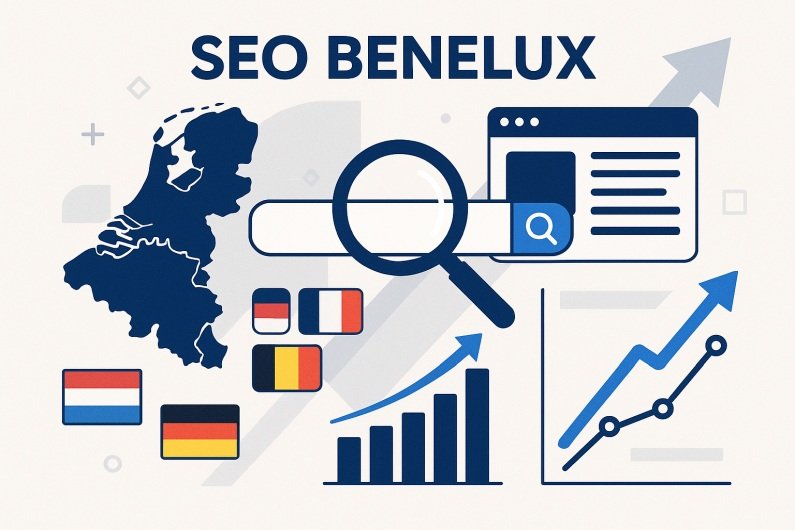
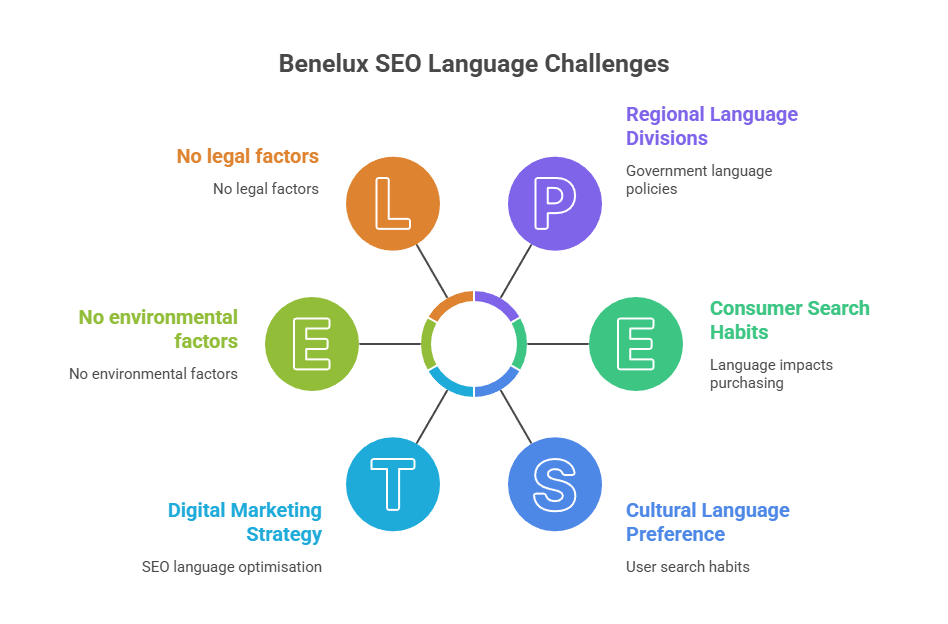
The linguistic landscape: why language forms the foundation of Benelux SEO
The Benelux encompasses three distinct nations with overlapping yet unique linguistic landscapes.
Any Benelux SEO strategy treating “Dutch” as a single language or ignoring Belgium’s trilingual nature already loses ground to local competitors respecting these boundaries.
Belgium: a trilingual powerhouse
Belgium presents the most complex piece of the regional puzzle.
The country divides into Flanders (Dutch-speaking), Wallonia (French-speaking), and a small German-speaking community in the eastern cantons near Eupen and Malmedy.
Brussels, the capital and major international business hub, operates as officially bilingual but practically multilingual.
Ranking in Belgium requires a dual-language strategy at minimum.
Optimising solely for French ignores over 60% of the population in Flanders.
Conversely, neglecting French means missing the economic engines of Wallonia and Brussels’ international community.
Effective multilingual content respects regional dialects and search habits rather than applying generic translations.
The Netherlands: high proficiency, local preference
The Netherlands boasts among the highest English proficiency scores worldwide, yet Dutch remains the dominant language for consumer search and B2B trust-building.
Websites available only in English often appear “foreign” or “temporary” to Dutch users.
Achieving strong rankings in the Netherlands requires native-level Dutch content.
Dutch consumers demonstrate direct, value-conscious behaviour; SEO copy must reflect this tone to convert traffic into sales.
Luxembourg: the multilingual hub
Luxembourg presents a unique case where French, German, and Luxembourgish all play roles.
For business and SEO purposes, French serves as the primary web language.
Depending on industry—particularly finance or law—German may prove equally vital.
Ignoring these distinctions in any Benelux digital marketing plan guarantees irrelevance.
Google.be vs Google.nl: navigating search engine preferences
Google dominates across all three countries, yet algorithmic treatment of local signals varies significantly.
Google.be optimisation requires careful balance between French and Dutch signals.
Incorrectly structured sites lacking proper hreflang tags confuse Google about which version to display—showing the wrong language to users in Ghent versus Charleroi.
Technical oversights lead to “cannibalisation,” where pages compete against each other, dragging down overall visibility.
Local business listings carry significant weight.
Businesses operating in Belgium benefit from verified Google Business Profiles with addresses in cities like Bruges, Antwerp, Liège, or Namur.
These profiles send powerful trust signals to the algorithm.
In the Netherlands, local directories and Dutch-specific platforms serve similar functions.
BeTranslated delivers more than word-for-word translation; the team navigates technical SEO requirements ensuring Google understands precisely who you are and where you belong.
Prevent technical errors from destroying your visibility.
Email hello@betranslated.be with project details for a same-day SEO audit and quote.
Keyword research: the subtle art of “Vlaams” vs “Nederlands”
Companies implementing SEO in the Benelux frequently assume Dutch in the Netherlands mirrors Dutch (Flemish) in Belgium.
While technically the same language, vocabulary, tone, and search intent differ significantly.
A Dutch person might search for “pinnen” (paying by card), while a Belgian searches “betalen met kaart.”
Using incorrect terminology damages rankings and signals to local users a fundamental misunderstanding of their market.
Belgian legal and official terminology follows strict regulations.
Documents involving the SPF Justice (Federal Public Service Justice) or Belgian courts demand precise terminology.
Keyword mistakes in legal or technical contexts create more than high bounce rates—they risk compliance issues.
BeTranslated employs native speakers living and working in these regions, ensuring SEO content for Belgium remains culturally and legally accurate.
Consider these regional variations:
- The Netherlands: favours informal marketing language; direct and straightforward communication
- Belgium (Flanders): tends toward slightly more formal expression; specific Flemish idioms build local trust
- Belgium (Wallonia): uses French differing subtly from Parisian French, particularly regarding numbers and business terminology
- Luxembourg: requires French primary content with German secondary for financial and legal sectors
Link building and authority in Benelux markets
Backlinks remain a cornerstone of search engine rankings.
For SEO in the Benelux, quality consistently outperforms quantity.
A link from a high-authority Belgian news site like Le Soir or De Standaard outweighs a hundred generic international links.
Ranking in the Netherlands requires mentions from Dutch industry blogs, university domains (.nl), or major portals like NU.nl.
Belgium’s role as the heart of the European Union amplifies local authority importance.
Links from organisations associated with EU institutions or Belgian trade federations can dramatically increase domain authority.
The BeTranslated team, located in Belgium at 106, Rue de la Mutualité, 4030 Liège, maintains local connections and linguistic skills for crafting outreach strategies resonating with Benelux editors and influencers.
Belgian business culture rewards personal connections and professional networking—often leading to the strongest digital opportunities.
Ready to boost your authority with local expertise?
Call +32 485 85 30 89 to discuss a localised link-building strategy.
The cost of “cheap” SEO: why quality represents your best investment
Businesses frequently attempt saving money through automated translation tools or budget international SEO agencies for Benelux expansion.
The typical result: 40% drops in conversion rates and complete absence of organic growth.
High-quality, localised SEO requires greater initial investment, but error costs—lost contracts, legal misunderstandings, missed revenue—far exceed the difference.
Belgian markets value precision.
Competition runs fierce.
“Good enough” guarantees failure.
BeTranslated provides premium services delivering measurable results.
Clients experience faster turnaround times and significantly higher engagement because SEO receives treatment as a holistic cultural adaptation process.
The goal extends beyond ranking sites; every page must speak the language of customers, whether located in Antwerp’s busy port district or Luxembourg’s financial centre.
Staying ahead of trends like multilingual content optimisation ensures businesses remain prepared for search evolution.
Strategic roadmap for success across Belgium, the Netherlands, and Luxembourg
Conquering SEO in the Benelux requires a roadmap accounting for every local variable.
The recommended approach includes:
- Audit current presence: determine visibility on Google.be and Google.nl through comprehensive Benelux SEO audits identifying strategic gaps
- Localise domain strategy: using .be or .nl TLDs sends powerful signals to users and search engines; .com domains require perfectly implemented subfolder structures (/be/ or /nl/) with correct hreflang tags
- Create contextual content: reflect local events, laws (including Belgian GDPR interpretations), and cultural moments; mentioning developments in Liège or business trends in Amsterdam demonstrates genuine market presence
- Optimise for mobile and speed: the Benelux features among the fastest internet speeds and highest smartphone penetration globally; slow sites face immediate rejection
- Implement voice search readiness: conversational queries require long-tail keywords and natural language phrases in both French and Dutch
Ready for Benelux market dominance?
Email hello@betranslated.be today and begin building your localised growth engine.
Partner with Benelux market specialists
Expanding into Belgium, the Netherlands, and Luxembourg offers incredible rewards—but only for businesses respecting regional complexity.
Generic approaches to SEO in the Benelux lead to frustration and wasted budgets.
Successful ranking requires partners understanding differences between French-speaking customers in Brussels versus Paris; partners recognising Dutch market requirements for specific tonal approaches; partners navigating technical hurdles of multilingual web architecture.
BeTranslated delivers precisely this expertise.
Based in Belgium, the team functions as more than a language service provider—serving as local guides to digital success.
Hundreds of businesses have conquered Benelux markets through precise, data-driven SEO and native-level content.
Secure your position today:
- Call: +32 485 85 30 89
- Email: hello@betranslated.be
- Online: Request your customised quote
Limited new SEO client capacity each month ensures dedicated service at the highest level.
No obligation, no pressure—just expert advice for winning in the Benelux.
Frequently asked questions about Benelux SEO
Do I need a .be or .nl domain to rank in Belgium or the Netherlands?
While not strictly mandatory, .be or .nl domains send very strong local SEO signals.
They immediately communicate to search engines and users that content targets specific countries.
Businesses preferring global .com domains must implement subfolder or subdomain structures combined with correct hreflang tags, ensuring Google correctly indexes localised content for Benelux audiences.
What differentiates Dutch in the Netherlands from Flemish in Belgium?
Written language remains largely identical (Standard Dutch), but significant differences exist in vocabulary, idioms, and cultural context.
For SEO in Belgium, Flemish-specific terms improve click-through rates and build local trust.
Product names and service descriptions may vary between regions.
Native translators from specific regions guarantee keywords resonating perfectly with target audiences.
Can an English-only website succeed in the Dutch market?
B2B technology sectors might achieve limited success, but for virtually every other industry, English-only sites represent major strategic errors.
Dutch consumers speak excellent English yet prefer searching, browsing, and purchasing in Dutch.
English-only sites consistently underperform against high-quality Dutch competitors in local search results.
English content can also suggest limited commitment to local markets, damaging conversion rates.
How important is voice search in the Benelux region?
Voice search grows rapidly across the Benelux, particularly in the Netherlands and Flanders.
Voice queries tend toward conversational, longer formats compared to typed searches.
Effective SEO strategies must include long-tail keywords and natural language phrases.
Optimising for voice search across multiple languages (French and Dutch) increasingly differentiates brands seeking competitive advantages in the region.
What technical SEO elements matter most for multilingual Benelux sites?
Correct hreflang implementation tops the priority list, preventing language version conflicts.
Site speed optimisation proves essential given the region’s high-speed internet infrastructure.
Mobile responsiveness, structured data markup, and proper URL structures for language variants all contribute to strong Benelux search performance.